A Complete Guide to Truck & Bus Radial (TBR) Tires
For logistics fleet managers, truck owners, and procurement professionals, truck & bus radial (TBR) tires are critical to operational safety, fuel efficiency, and cost control. Choosing the right TBR tire and maintaining it properly can significantly reduce downtime and lower per-kilometer operating costs.
1.What Are TBR Tires?
TBR (Truck & Bus Radial) tires are all-steel radial tires specifically designed for heavy-duty vehicles, including trucks, buses, trailers, and engineering vehicles. Unlike bias-ply tires, TBR tires feature a radial structure that delivers superior performance for long-haul and heavy-load scenarios.
Core Components of TBR Tires
-
Treten: The outermost layer that contacts the road, responsible for grip, wear resistance, and water drainage. Tread pattern design directly determines the tire’s performance in different road conditions (e.g., highways, mountain roads).
-
Belts: High-tensile steel layers that reinforce the tire’s rigidity, improving driving stability, load-bearing capacity, and overall service life.
-
Carcass: The “skeleton” of the tire, made of high-strength fibers, which bears the vehicle’s load, internal pressure, and road impact.
-
Bead: A high-strength steel bundle that tightly locks the tire onto the rim, ensuring airtightness and safety during high-speed or heavy-load operation.
-
Inner Liner: A special rubber layer designed for tubeless TBR tires, reducing air leakage and maintaining stable internal pressure.
Why Choose Radial TBR Tires Over Bias-Ply Tires?
-
Higher load-bearing capacity and durability, suitable for heavy-duty transportation.
-
Lower rolling resistance, which reduces fuel consumption by 5-10% compared to bias-ply tires—critical for long-haul fleets.
-
Better driving stability and handling, even at high speeds or on uneven roads.
-
Longer service life, thanks to uniform wear and high-quality materials.
For more authoritative information on radial tire technology, visit the U.S. Tire Manufacturers Association (USTMA) commercial tire guide.
2. How to Read Truck Tire Specifications (TBR Size Guide)
Understanding TBR tire specifications is essential for selecting the right tire for your vehicle. Here’s a breakdown of the standard specification format, using295/80R22.5 18PR as an example:
-
295: Section width of the tire (in millimeters), the distance between the two sidewalls when the tire is properly inflated.
-
80: Aspect ratio, which is the ratio of the tire’s profile height to its section width (80% means the profile height is 80% of 295mm).
-
R: Indicates radial construction (vs. “B” for bias-ply).
-
22.5: Rim diameter (in inches), the size of the rim the tire is designed to fit.
-
18PR: Ply rating, which indicates the tire’s load-bearing capacity (18PR = 1040kg per tire at the specified pressure).
Common SEYOUN TBR Tire Sizes
SEYOUN offers a full range of TBR tires to meet diverse application needs. Popular sizes include:
-
295/80R22.5, 315/80R22.5 (heavy-duty long-haul)
-
6.50R16LT, 7.00R16LT, 7.50R16LT, 8.25R16LT (light-duty trucks)
-
11.00R20 (engineering and mining vehicles)
View SEYOUN’s complete TBR product lineup: SEYOUN TBR Truck Tires.
| All Sizes | ||||||
| 6.50R16LT | 9.00R20 | 11R24.5 | 13R22.5 | 245/70R17.5 | 295/60R22.5 | 295/75R22.5 |
| 7.00R16LT | 10.00R20 | 12.00R20 | 215/75R17.5 | 245/70R19.5 | 275/80R22.5 | 315/70R22.5 |
| 7.50R16LT | 11.00R20 | 12.00R24 | 225/80R17.5 | 265/70R19.5 | 295/80R22.5 | 385/65R22.5 |
| 8.25R16LT | 11R22.5 | 12R22.5 | 235/75R17.5 | 275/70R22.5 | 315/80R22.5 | 205/85R16LT |
3. Professional TBR Tire Maintenance Tips to Extend Service Life
Proper maintenance is key to maximizing TBR tire life, reducing failure risks, and lowering operating costs. Follow these expert tips:
1. Maintain Correct Cold Tire Pressure
Check tire pressure when the tire is cold (not driven for 3+ hours). Underinflation causes excessive tire flex, overheating, and rapid sidewall wear; overinflation leads to uneven tread wear, a harsh ride, and higher puncture risk.
2. Avoid Overloading
Overloading is the leading cause of TBR tire failure, including carcass deformation and blowouts. Always match the tire’s ply rating (PR) to the actual axle load—never exceed the manufacturer’s load capacity guidelines.
3. Regular Tire Rotation & Wheel Alignment
Rotate tires every 30,000–50,000 km to ensure uniform wear across all axles. Additionally, check wheel alignment (toe-in, toe-out, camber) regularly to prevent “one-sided wear” and improve handling.
4. Proper Installation & Balancing
Use standard rims and professional mounting tools to avoid damaging the tire bead or carcass. Never mix different brands, structures (radial vs. bias-ply), or wear levels on the same axle. Ensure tires are properly balanced to reduce vibration and uneven wear.
5. Conduct Regular Inspections
Check tires daily for cuts, bulges, embedded stones, or damage to the sidewall. Monitor tread depth—replace tires when the tread reaches the wear indicator (1.6mm for highway tires, 3.2mm for off-road tires).
4. Why Choose SEYOUN TBR Tires for Your Fleet?
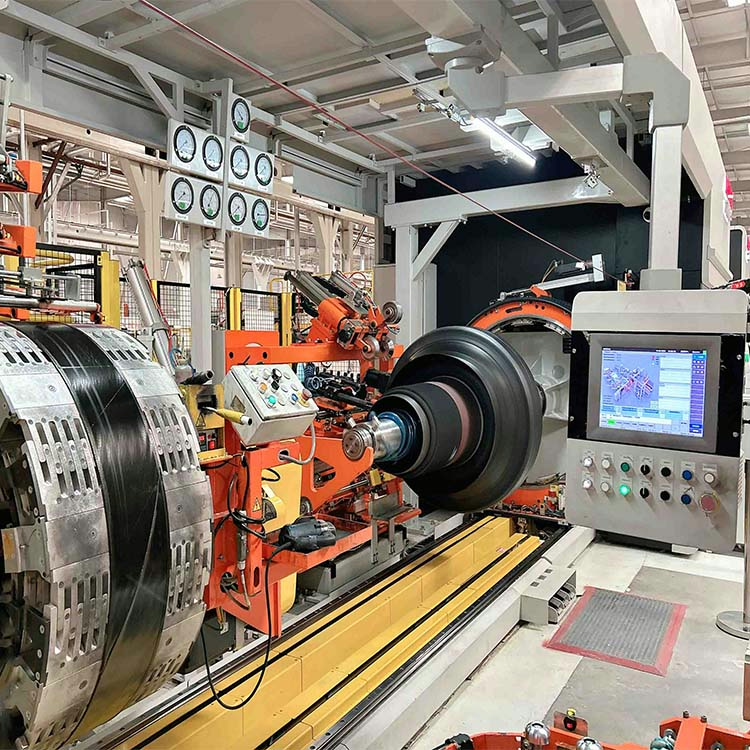
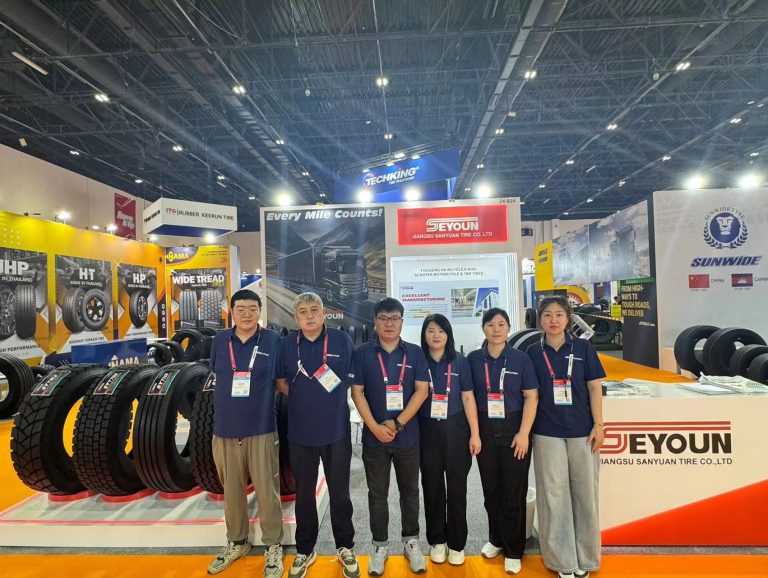
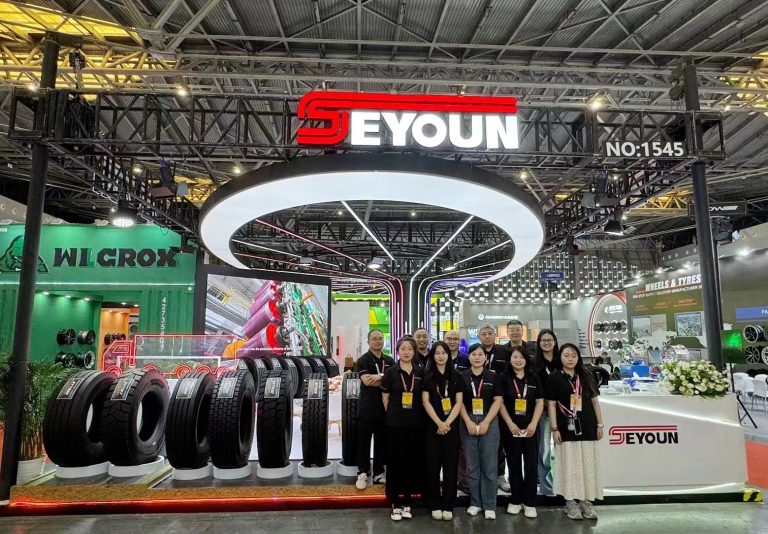
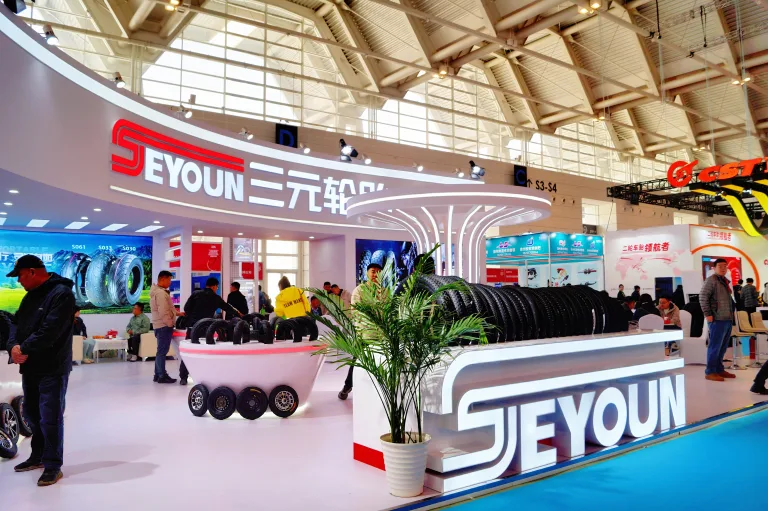
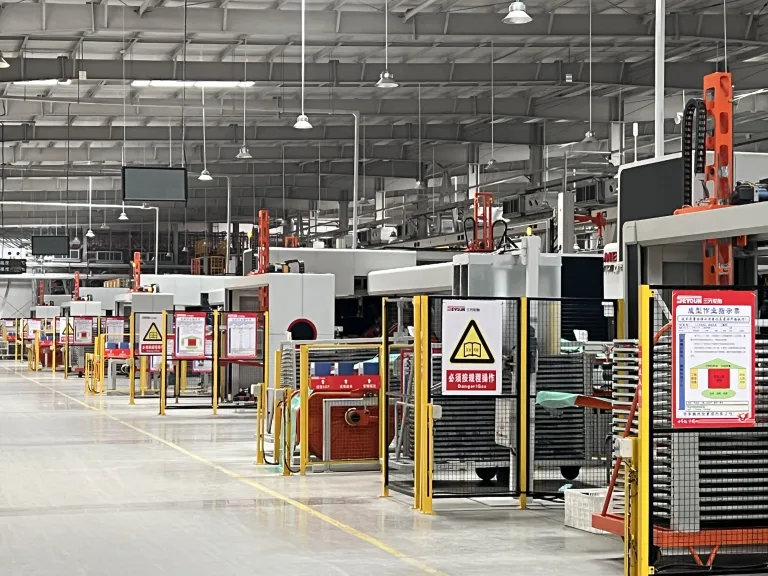
SEYOUN Tire (Jiangsu Sanyuan Tire Co., Ltd.) is a leading manufacturer of all-steel radial TBR tires, with a fully automatic Industry 4.0 production base and an annual capacity of 3.2 million TBR tires. SEYOUN’s commitment to quality and innovation makes it a trusted partner for fleets worldwide.
Core Advantages of SEYOUN TBR Tires
-
Premium Materials: Uses high-quality natural rubber and high-tensile steel cord to ensure durability and load-bearing capacity.
-
Intelligent Manufacturing: Industry 4.0 production lines (including automatic mixing, building, and curing) ensure consistent quality and precision.
-
Optimized Design: Advanced belt and carcass design for heavy loads, long mileage, and low rolling resistance (reducing fuel costs).
-
Proven Performance: Tested and verified on diverse road conditions—highways, mountain roads, construction sites, and mining areas.
SEYOUN Top-Rated TBR Models
-
SYT668: 11R22.5, 295/80R22.5, 315/80R22.5 – Perfect for long-haul fleets, with low rolling resistance and long service life.
-
SYT819: 6.50R16LT ~ 315/80R22.5 – Strong traction for mixed road conditions, ideal for mountain and construction fleets.
Choosing the right TBR tire requires balancing size, tread pattern, load capacity, and road conditions. With proper maintenance, your TBR tires can deliver safer, more efficient performance while reducing operating costs. SEYOUN TBR tires combine advanced technology, premium materials, and intelligent manufacturing to meet the demands of modern fleets—whether you’re running long-haul highways or tough off-road routes. For information on the usage and evaluation of SEYOUN Tires, please refer to Facebook.